Will AI Replace Insurance Adjusters?
Jul 10, 2026
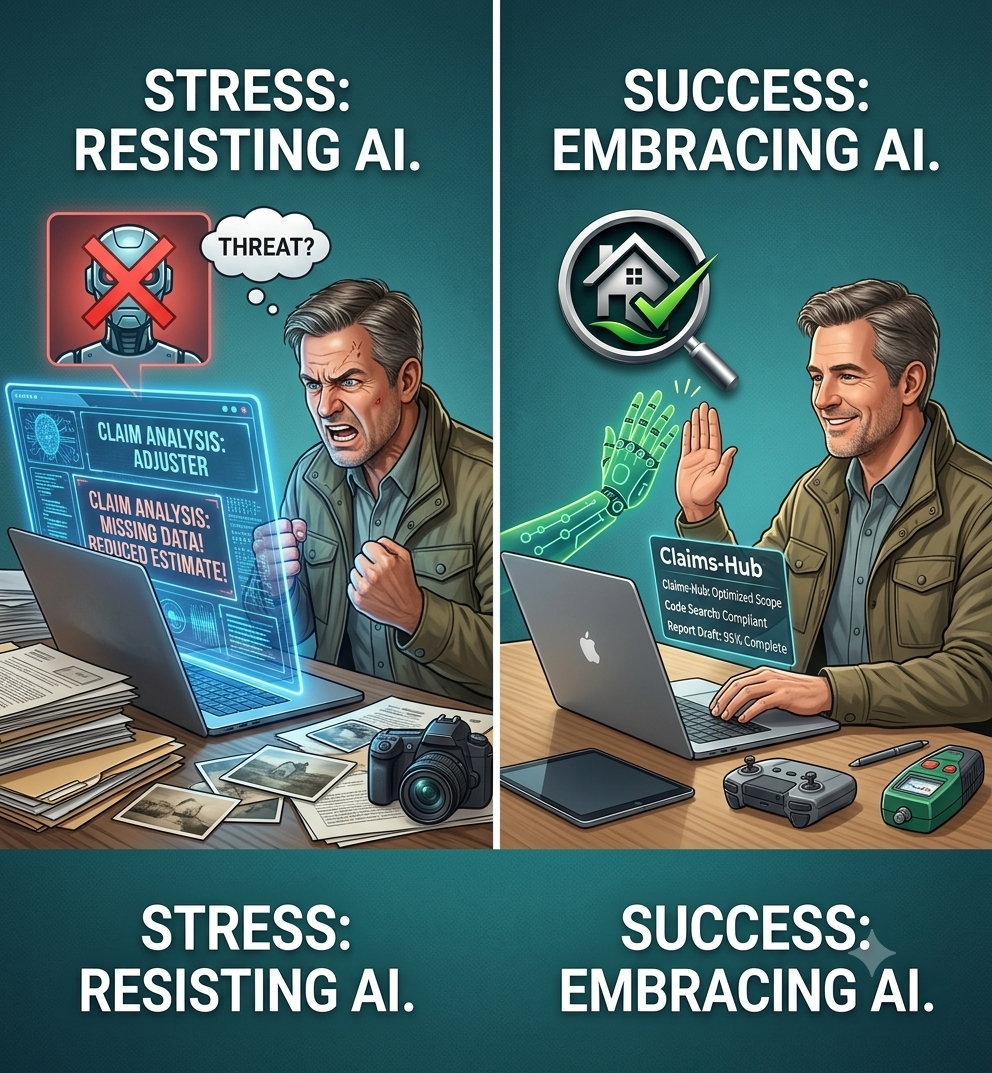
The better question is: will AI replace adjusters who refuse to adapt?
By Douglas Castro, General Adjuster
It’s probably the question I hear more than any other from fellow adjusters.
“Is AI going to replace us?”
The short answer is: No—not entirely.
The longer answer is much more interesting.
Artificial intelligence has already entered the insurance industry. Whether we like it or not, it’s becoming another tool that carriers, TPAs, independent adjusting firms, and software vendors are using to improve consistency, reduce costs, and increase efficiency.
Many adjusters understandably feel uneasy about this. Whenever a new technology enters an industry, there’s concern that jobs will disappear. We’ve seen it happen in manufacturing, banking, retail, travel, and countless other professions.
Insurance adjusting will change as well. But change doesn’t necessarily mean extinction. In fact, I believe AI will elevate the best adjusters while making it increasingly difficult for those who refuse to adapt.
AI Is Already Here
Some people speak about artificial intelligence as though it’s still years away. It isn’t. AI is already assisting with:
- Photograph analysis
- Document summarization
- Claim intake
- Fraud detection
- Coverage review assistance
- Customer service chatbots
- Estimate analysis
- Quality control
- Workflow automation
Even many adjusters using Xactimate every day don’t realize that artificial intelligence and machine learning technologies have gradually become part of modern estimating workflows. This isn’t science fiction. It’s today’s reality.
Why Carriers Are Investing in AI
Insurance carriers face constant pressure to do more with less. They are expected to:
- Reduce operating costs
- Improve customer satisfaction
- Close claims faster
- Maintain consistent quality
- Reduce leakage
- Detect fraud
- Handle increasing claim volume
Artificial intelligence offers another tool to help achieve those goals. Notice I said tool. Not replacement. The purpose of AI is often to assist people in making better decisions more quickly—not necessarily to eliminate them.
Some Jobs Will Change Faster Than Others
If I had to predict where AI will have the greatest impact first, my personal opinion would be something like this:
- File Reviewers
- Desk Adjusters
- Field Adjusters
That doesn’t mean these positions disappear overnight. It means portions of their work are especially well suited for automation.
File Reviewers
A file reviewer spends much of the day evaluating documentation for consistency and completeness. They look for questions like:
- Is required documentation present?
- Does the estimate support the photographs?
- Are required forms completed?
- Were carrier guidelines followed?
- Are there missing line items?
- Does the report match the estimate?
- Are there mathematical inconsistencies?
These are exactly the kinds of repetitive analytical tasks that AI is becoming increasingly capable of assisting with. Rather than replacing every reviewer, AI may become the first pass—flagging potential issues so reviewers can focus on the most important judgment calls.
Desk Adjusters
Desk adjusters manage an enormous amount of information: emails, photographs, estimates, recorded statements, engineering reports, invoices, policy language, and customer communication.
AI is already helping organize, summarize, prioritize, and analyze large volumes of information. That doesn’t eliminate the need for experienced desk adjusters. It allows them to spend more time making decisions instead of searching for information.
Field Adjusters
Field adjusting is a different challenge entirely. Every loss is unique. Every homeowner is different. Every property presents its own surprises. Field adjusters must:
- Interview policyholders
- Build trust
- Observe damage firsthand
- Identify conditions that photographs may not capture
- Exercise professional judgment
- Navigate difficult conversations
- Adapt to changing circumstances
These human skills remain extraordinarily valuable. Technology can assist the inspection. It cannot fully replace the experience, communication, and judgment that occur on-site—at least not anytime soon.
Claims Will Probably Be Handled Differently
The bigger question isn’t whether adjusters disappear. It’s whether the claim process itself changes. I believe it will. We’re already seeing:
- Better customer-submitted photographs
- Drone imagery
- Satellite measurements
- Remote inspections
- Automated documentation
- AI-assisted estimates
- Faster communication
Rather than replacing adjusters, these technologies may reduce repetitive administrative work and allow adjusters to focus on higher-value tasks. The role evolves. It doesn’t simply vanish.
The Adjusters Who Thrive Will Embrace AI
Every generation of adjusters has had to learn new technology. Paper estimates became digital. Hand-drawn roof sketches became aerial measurements. Printed maps became GPS. Digital cameras replaced film.
Now artificial intelligence is becoming another professional tool. The adjusters who thrive won’t necessarily be the ones who know the most shortcuts inside Xactimate. They’ll be the ones who know how to combine experience with technology.
AI Doesn’t Replace Professional Judgment
One misconception is that AI “knows” how to adjust claims. It doesn’t. AI analyzes patterns. It organizes information. It identifies inconsistencies. It summarizes documents. It helps surface issues.
But it doesn’t inspect a roof. It doesn’t smell smoke damage. It doesn’t interview a homeowner. It doesn’t determine credibility. It doesn’t understand the countless small details experienced adjusters recognize through years of field work.
Professional judgment remains essential.
Better Adjusters Will Use Better Tools
Think about construction. Professional contractors use laser levels, digital measuring tools, drones, moisture meters, and thermal imaging. No one says those tools replace contractors—they make contractors better.
AI is no different. It becomes another tool in the professional’s toolbox.
How Claims-Hub Fits Into That Future
Claims-Hub.com wasn’t created to replace adjusters. It was created to help them. The philosophy behind Claims-Hub is simple: catch potential problems before the file reviewer catches them.
Instead of replacing the adjuster’s experience, Claims-Hub provides another layer of quality control.
Claim Review
Review estimates for missing scope items, potential inconsistencies, weak documentation, opportunities to improve estimate quality, and common reviewer concerns. The goal is to help submit cleaner files the first time.
Code Search
Building codes change. Jurisdictions differ. Even experienced adjusters occasionally work outside their normal territory. Claims-Hub helps research applicable code requirements so important scope items are less likely to be overlooked.
Report Writer
Professional reports often consume significant time. Claims-Hub helps organize claim information into structured report drafts that the adjuster can review, edit, and finalize. The adjuster remains responsible for the finished report. The software simply helps reduce repetitive writing.
The Biggest Threat Isn’t AI
In my opinion, the biggest threat isn’t artificial intelligence. It’s refusing to learn.
Every profession changes. The people who continue learning generally remain valuable. The ones who insist that everything should stay the same often struggle the most.
AI should be viewed as another professional skill. Just as adjusters learned Xactimate, aerial sketching, digital photography, and mobile estimating, learning to work alongside AI is becoming part of the modern profession.
Advice for New Adjusters
If you’re entering the insurance industry today:
- Learn Xactimate.
- Study construction.
- Understand building codes.
- Write excellent reports.
- Learn carrier expectations.
- Master communication.
Then learn how AI can help you become even better. Don’t compete against technology. Learn to use it better than everyone else.
Final Thoughts
Artificial intelligence will undoubtedly reshape parts of the insurance industry. Some tasks will become faster. Some roles will evolve. New responsibilities will emerge.
But claims adjusting has always been about more than writing estimates. It requires observation, communication, empathy, critical thinking, construction knowledge, and sound professional judgment. Those qualities remain difficult to automate.
The future likely won’t belong to adjusters who reject AI—or to AI working alone. It will belong to adjusters who combine their field experience with intelligent tools to produce more accurate estimates, stronger documentation, and better outcomes for policyholders, carriers, and TPAs.
In the end, AI isn’t replacing professionalism. It’s raising the standard for it.
About the Author
Douglas Castro is a licensed General Adjuster and founder of Claims-Hub.com. His mission is to help independent adjusters leverage modern technology—including AI—to improve estimate quality, reduce unnecessary file revisions, and spend more time serving policyholders with confidence and professionalism.