How Long Does It Take to Become an Insurance Adjuster?
Jul 10, 2026
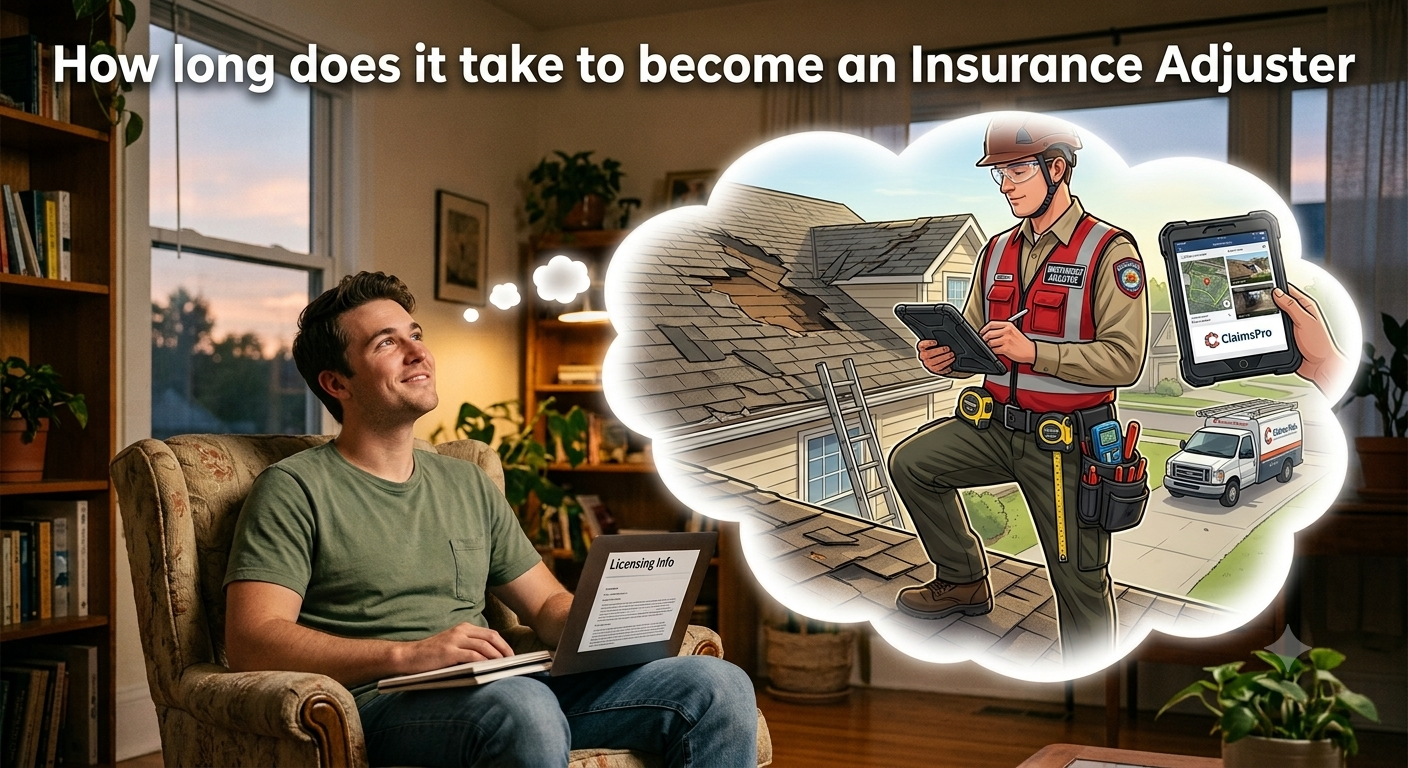
A Realistic Timeline From Licensing to Your First Paid Claim
One of the first questions people ask when considering a career as an insurance adjuster is:
"How long does it take to become an insurance adjuster?"
The answer depends on several factors, including where you live, whether your state requires licensing, and how much time you can dedicate to training.
From a licensing standpoint, many people can become eligible to work in a few weeks to a couple of months.
However, becoming licensed and becoming successful are two very different things.
As someone who has worked in the industry, I can tell you that earning your license is simply the starting line—not the finish line.
Let's walk through what the journey really looks like.
Step 1: Obtain Your Adjuster License
The first requirement is determining whether your home state requires an insurance adjuster license.
Some states issue resident adjuster licenses, while others allow adjusters to obtain a designated home-state license if their own state doesn't license adjusters.
Once you determine the licensing requirements, you'll typically need to:
- Complete any required pre-licensing education (if applicable)
- Pass the state licensing examination (where required)
- Submit fingerprints or background information if required
- Apply for your adjuster license
For many people, this process can be completed within several weeks.
What Does Licensing Cost?
There are several ways to obtain your license.
Option 1: Do It Yourself
Many new adjusters choose the self-study route.
Typical expenses may include:
- Approximately $250 for licensing education and examination preparation
- Around $300 for continuing education (CE) requirements and renewals over time
- State licensing and fingerprint fees (varies by state)
This is often the most affordable path for self-motivated learners.
Option 2: Professional Training Programs
Some people prefer attending adjuster schools or comprehensive training programs.
These programs often include:
- Licensing preparation
- Hands-on estimating instruction
- Claim handling scenarios
- Field exercises
- Instructor support
- Networking opportunities
The trade-off is cost.
Depending on the program, tuition can range from several hundred dollars to several thousand dollars.
For some students, the additional guidance is well worth the investment.
For others, independent study followed by real-world experience is enough.
Neither path is inherently right or wrong—it depends on your learning style, budget, and career goals.
Step 2: Learn Estimating Software
After licensing comes one of the biggest learning curves.
Modern property adjusters are expected to work with professional estimating software.
The two platforms you'll encounter most often are:
- Xactimate
- Symbility (Cotality)
These programs allow adjusters to:
- Sketch structures
- Build repair estimates
- Price repairs
- Organize rooms
- Generate professional estimate reports
Learning either platform takes practice.
Learning both makes you even more versatile.
Fortunately, both companies provide training resources to help new users get started.
Step 3: Learn the Claim Management Systems
Writing an estimate isn't enough.
You'll also need to learn the claim management systems used by carriers and TPAs.
One of the most common systems you'll encounter is:
- FileTrac
Claim management systems organize:
- Assignments
- Photographs
- Documents
- Estimates
- Reports
- Communication
- Deadlines
- File submissions
Every carrier or TPA has its own workflow, so expect to continue learning long after obtaining your license.
Step 4: Find Your First Opportunity
After licensing and training, you'll generally pursue one of two career paths.
Staff Adjuster
Working directly for an insurance carrier usually provides:
- Structured onboarding
- Salary and benefits
- Formal training
- Mentorship opportunities
- Greater consistency
For many people, this is an excellent way to build experience.
Independent Adjuster
Independent adjusters often work for:
- Independent adjusting firms
- Third-Party Administrators (TPAs)
- Catastrophe response companies
This path offers greater flexibility and earning potential but generally requires a higher level of self-management.
You'll often work for multiple carriers throughout your career.
The Part Nobody Warns You About
Here's where many new adjusters encounter their biggest challenge.
You complete your licensing.
You learn Xactimate.
You become comfortable with Symbility.
You understand FileTrac.
You finally receive your first assignment.
Then your inbox fills with:
- Carrier onboarding documents
- TPA procedures
- Required forms
- Documentation standards
- Reporting instructions
- Deadlines
Suddenly, you're expected to begin handling claims professionally.
Many new adjusters describe this moment as feeling like a deer caught in the headlights.
Not because they don't know the software.
Because they don't yet understand everything surrounding the software.
Software Doesn't Teach You Carrier Expectations
Whether you're using Xactimate or Symbility, estimating software doesn't explain:
- Carrier-specific guidelines
- TPA expectations
- Required photographs
- File review standards
- Building code considerations
- Manufacturer installation requirements
- Report writing
- Documentation best practices
- Common reasons files are returned
Those lessons usually come through experience.
Unfortunately, that experience often comes after receiving file review comments.
That's Where Confidence Is Built
Every experienced adjuster has had files returned.
Every experienced adjuster has overlooked something.
Every experienced adjuster has learned from reviewer feedback.
The goal isn't perfection.
The goal is continuous improvement.
The faster you learn, the faster you become valuable.
How Claims-Hub Helps New Adjusters
Claims-Hub.com was built to help shorten the learning curve.
Instead of waiting for a file reviewer to identify problems after submission, Claims-Hub helps adjusters improve their files before they submit them.
Current features include:
Claim Review
Review estimates for:
- Missing scope items
- Estimate inconsistencies
- Documentation weaknesses
- Common reviewer concerns
- Opportunities to improve estimate quality
Think of it as another experienced set of eyes reviewing your work.
Code Search
Research applicable building code requirements that may affect your estimate.
This can help identify code-related repairs that newer adjusters might not yet recognize.
Report Writer
Professional claim reports often take significant time to prepare.
Claims-Hub helps organize your inspection information into structured report drafts that you can review, edit, and finalize.
The goal is to reduce repetitive writing while maintaining your control over the finished report.
Becoming a Great Adjuster Takes More Than Passing an Exam
Licensing opens the door.
Experience builds confidence.
Construction knowledge builds credibility.
Communication earns trust.
Technology improves efficiency.
The best adjusters never stop learning.
Every claim teaches something new.
Final Thoughts
From a purely licensing perspective, many people can become an insurance adjuster within a few weeks to a couple of months, depending on their state's requirements and the time they dedicate to studying.
But becoming a successful adjuster involves much more than obtaining a license. You'll need to learn estimating software such as Xactimate and Symbility, become familiar with claim management systems like FileTrac, understand carrier and TPA expectations, and develop the judgment that comes from handling real claims.
The learning process doesn't end when you pass the licensing exam—it begins there.
That's why tools like Claims-Hub.com can be valuable, especially for newer adjusters. By helping review estimates, identify potential issues, research building code requirements, and streamline report writing, Claims-Hub supports adjusters as they build the experience and confidence needed to succeed in today's property claims industry.
Your license gets you in the door.
Your willingness to keep learning determines how far you'll go.
About the Author
Douglas Castro is a licensed General Adjuster and founder of Claims-Hub.com. Drawing on years of field experience, he created Claims-Hub to help adjusters strengthen their estimates, improve documentation, and navigate the challenges of modern property claims with greater confidence and efficiency.